
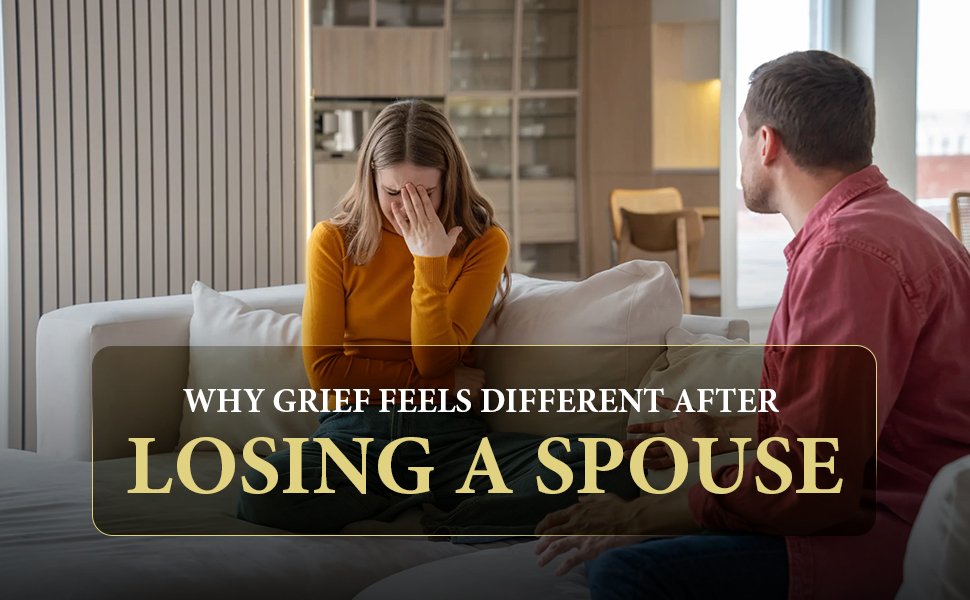
Grief is never simple, but grief after losing a spouse carries a depth that feels uniquely overwhelming. It is not only the loss of a loved one; it is the loss of shared identity, daily routine, emotional safety, and future plans. Many widows and widowers struggle to understand why their grief feels heavier, more disorienting, and longer-lasting than they expected.
In his compassionate work, Dr. Noah McArthur explains that spousal loss reshapes life in ways other forms of grief do not. This article explores why that happens — and why feeling “different” in your grief is not only normal, but expected.
A Spouse Is Part of Your Identity
When you lose a spouse, you lose more than a person. You lose a role you lived in every day. Marriage weaves two lives together — emotionally, practically, and socially. When one half is gone, the surviving partner is left redefining who they are.
This identity shift is why many people feel unsteady long after the loss. Everyday decisions suddenly feel unfamiliar. Even simple routines can trigger emotional pain. This reality is explored deeply in discussions about life after losing a spouse, where grief is shown as both emotional and structural.
Spousal Grief Is Constant, Not Occasional
Unlike other losses that may affect certain moments, spouse loss grief touches nearly every part of daily life. Your partner was present in:
- Morning routines
- Household decisions
- Financial planning
- Emotional conversations
- Social identity
- Long-term goals
Their absence is felt repeatedly throughout the day, which makes the grieving process feel never-ending. This constant exposure to loss is one of the reasons grief after partner death feels so intense.
The Emotional Bond Is Deeper
Spouses share a level of emotional intimacy that is difficult to replicate. Your spouse often knew your fears, habits, dreams, and unspoken thoughts. Losing that connection creates a silence that feels heavier than words can describe.
Many widows and widowers report that this emotional absence hurts more than the practical changes. This emotional reality connects closely with how healing after the death of a partner unfolds — slowly, unevenly, and without a clear timeline.
Grief Is Mixed With Fear and Uncertainty
Spousal loss introduces fears that may not accompany other types of grief:
- Fear of being alone
- Fear of financial instability
- Fear of the future
- Fear of making decisions alone
- Fear of forgetting or being forgotten
These fears compound emotional pain, making widow grief experience feel heavier and more complex. Grief is no longer just about missing someone — it’s about learning how to survive without them.
Grief Comes in Waves, Not Stages
Many people expect grief to move neatly from one stage to another. In reality, spousal grief is unpredictable. You may feel stable one day and overwhelmed the next. Progress often feels interrupted.
This is why understanding the stages of widowhood can be helpful — not as a checklist, but as a framework that normalizes emotional shifts.
Widowhood is not a straight path. It is a cycle of adjustment, remembrance, rebuilding, and reflection.
Memories Are Everywhere
Shared memories are unavoidable. Homes, photos, music, anniversaries, holidays — all become emotional reminders. Even positive memories can trigger pain because they highlight what has been lost.
This constant presence of memory explains why emotional impact of losing a spouse often lasts longer than expected. Healing does not mean forgetting; it means learning how to live with memory in a way that does not overwhelm daily life.
Grief Challenges the Future, Not Just the Past
Spousal loss affects future identity. Plans made together suddenly feel irrelevant or painful. Dreams may feel unreachable. Many widows and widowers describe grief as mourning not only their partner, but the life they expected to live.
This forward-facing grief is one of the least understood aspects of spousal loss — and one of the hardest to process emotionally.
Why Comparison Makes Grief Worse
One of the most damaging things grieving spouses experience is comparison. Well-meaning people may say:
- “You’re still grieving?”
- “It’s been a while now.”
- “Others move on faster.”
But grief after losing a spouse does not follow a universal timeline. Comparing your grief to others only adds guilt and confusion to an already painful process.
Dr. Noah McArthur emphasizes that grief must be honored individually. Healing moves at its own pace — and forcing it only deepens emotional strain.
What Helps When Grief Feels Different
Although spousal grief is uniquely painful, certain practices can help stabilize emotions over time:
- Accepting that your grief is valid
- Allowing emotions without judgment
- Rebuilding routines slowly
- Staying connected with supportive people
- Giving yourself permission to rest
- Seeking guidance when overwhelmed
These steps do not erase pain, but they help create space for widow emotional healing to begin.
Conclusion
Grief after losing a spouse feels different because the loss touches every part of life — identity, routine, emotion, and future direction. The intensity of spousal grief does not mean something is wrong with you; it means the bond you lost was deep and meaningful.
Through compassionate insight, Dr. Noah McArthur reminds grieving spouses that their experience is valid, their pain is understandable, and healing does not require rushing or comparison. Grief changes shape over time, and while it may never disappear completely, it can become easier to carry.