
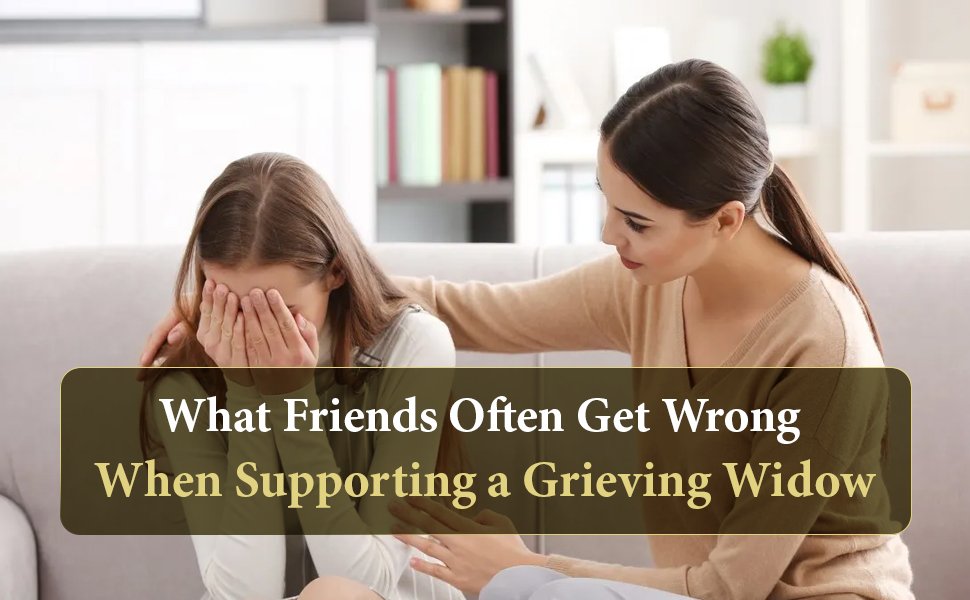
When someone loses their spouse, they enter a world of emotional turmoil, confusion, and pain. The grieving widow is left to navigate the harsh realities of life without their lifelong partner. For friends and loved ones trying to help, it can be incredibly difficult to know how to offer the right kind of support.
Despite the best of intentions, many friends inadvertently say or do the wrong things, adding to the widow’s burden rather than alleviating it. In My Prayer on the Rock, Dr. Noah McArthur offers an in-depth look at the complex emotions widows face, and the nuances of what truly helps them heal. The key to offering meaningful support lies not in quick fixes, but in understanding, patience, and empathy.
This blog explores the common mistakes that well-meaning friends often make and how to offer more compassionate and effective support during the grieving process.
The Pressure to “Move On” Quickly
One of the most common mistakes friends make when supporting a grieving widow is the pressure to “move on” or “get back to normal.” Widows often hear phrases like “It’s time to start living again,” or “You’ve had enough time to grieve.” However, Dr. Noah McArthur in My Prayer on the Rock emphasizes that grief does not adhere to a timeline. It is an ongoing process that requires space and time. Moving on too quickly not only undermines the widow’s experience but also minimizes the depth of the loss.
Instead, offer support that acknowledges that grief is a long-term journey. Allow the widow to take her time, and don’t rush her healing. Friends should be mindful of the widow’s emotional state, respecting the need for space while still offering ongoing support.
Instead of rushing to get the widow back to “normal,” allow her to go through the natural process of healing after losing a spouse, which often involves feeling the pain in order to process it and eventually begin moving forward.
The “Silver Lining” Approach
Another common mistake is attempting to find a “silver lining” in the widow’s loss. Statements such as “At least she’s in a better place” or “Everything happens for a reason” may seem comforting to some, but for the grieving widow, they can feel dismissive of the pain they are experiencing. Dr. Noah McArthur points out that while these sentiments may be well-intentioned, they often fail to provide the widow with the space to feel her grief.
Instead of rushing to find a positive spin, it’s more helpful to validate the widow’s emotions. Saying things like, “I can’t imagine how hard this must be for you,” or “I’m here for you, no matter how long this takes,” can be much more healing. The goal is not to fix the situation but to provide emotional presence and understanding.
This approach is vital in the context of hope and resilience after spouse loss, where we learn that healing doesn’t come from ignoring the pain, but from facing it head-on.
Avoiding Conversations About the Spouse
Friends often shy away from mentioning the deceased spouse, thinking it will make the widow sadder. However, Dr. Noah McArthur explains that talking about the lost loved one is an important part of the healing process. Widows often want to remember their spouse and keep their memory alive. Ignoring the loss can make them feel isolated and misunderstood.
Friends can offer support by asking about the deceased spouse or sharing their own memories. Allowing the widow to talk about their spouse helps her process the grief in a way that honors her relationship. Rather than avoiding the topic, acknowledge the importance of the person who has been lost.
The “Fixer” Mentality
Many friends want to “fix” the widow’s pain by offering practical solutions, such as “Just get out and do something fun,” or “You need to start going back to work.” While well-intended, this “fixer” mentality does not allow the widow to process her grief at her own pace. Dr. Noah McArthur advises that instead of trying to solve the problem, friends should focus on being present.
It’s important to acknowledge that grief can’t be fixed — it can only be felt and worked through. The widow may not be ready for activities or may need to take small steps before returning to a semblance of normal life. Encourage the widow to take things at her own pace, offering support without the expectation of a quick recovery healing after the death of a partner.
Offering Practical Help
While emotional support is crucial, widows often need practical assistance as well. Many friends fail to offer tangible help, or they simply offer to “let me know if you need anything,” which can put the burden on the widow to ask for help — something that many people find difficult to do when they are grieving.
Dr. Noah McArthur suggests that friends offer specific, practical assistance, such as preparing meals, helping with household chores, or offering to take the widow to appointments. These small acts of kindness can help relieve some of the daily stress that comes with mourning and managing life on your own.
The Role of Listening and Empathy
One of the most valuable things a friend can offer a grieving widow is the ability to listen without judgment or advice. Sometimes, the widow just needs someone who will sit with her, listen to her thoughts, and allow her to express her emotions without fear of being “fixed.”
Dr. Noah McArthur emphasizes that empathy and patience are the keys to supporting someone who is grieving. Rather than offering solutions, simply listening with an open heart can provide the widow with the emotional space she needs to process her grief.
Conclusion
Supporting a grieving widow is a delicate task that requires understanding, patience, and compassion. Dr. Noah McArthur stresses that healing from the loss of a spouse is a slow and personal journey, and that friends can play a critical role by providing emotional space, acknowledging the grief, and being present without trying to fix it. Widows need validation, connection, and support that respects their pace.
Offering practical help, validating their feelings, and providing a safe space to express grief can make all the difference in a widow’s healing journey. By learning what to avoid and what to do, friends can offer more meaningful and effective support.